
Age-aware, family-guided learning
Choose a level first, then follow a subject with purpose
Children learn differently at five, ten, thirteen, and seventeen. The curriculum organizes existing lessons into four age levels and four strands so families always have a sensible next step.
Choose a learning level
Begin with the learner, not the size of the library
Discover
Adult-led lessons using familiar objects, stories, values, and festival experiences.
See lessons →Ages 8–10Explore
Short explanations, vocabulary, a quiz, and a family discussion.
See lessons →Ages 11–13Understand
Comparison, multiple perspectives, source notes, and open-ended reflection.
See lessons →Ages 14–17Reflect
Independent reading about identity, interpretation, practice, and modern questions.
See lessons →Explore by subject
Follow one strand across age levels
A strand creates continuity while keeping language and activity age-appropriate.
Beliefs and values
Dharma, karma, compassion, responsibility, and service.
Explore strand →Deities and sacred stories
Sacred figures, source-aware stories, and interpretation.
Explore strand →Festivals and practices
Festival life, puja, temple visits, prasad, and lamps.
Explore strand →Scriptures and traditions
Texts, epics, and why Hindu traditions differ.
Explore strand →Featured lesson
What Is Dharma?
An Explore-level lesson uses responsibility and context to introduce dharma without turning it into a single rule. Vocabulary, a short quiz, a discussion question, and a safe activity help an adult guide the conversation.
Open the lesson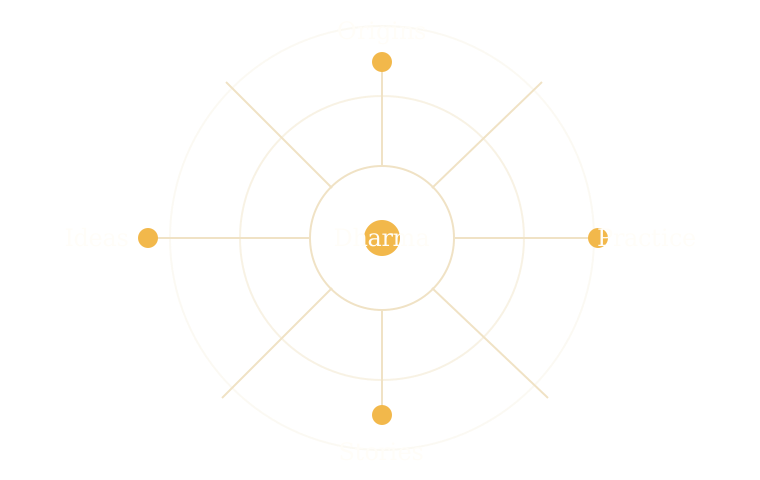
A repeatable family rhythm
Five minutes can still have a clear purpose
Begin with one object, story, question, or value. Learn two words. Ask one open question. End by choosing the next lesson rather than trying to cover everything at once.
How the curriculum works
Age guidance, learning strands, and a clear next lesson
The four levels—Discover, Explore, Understand, and Reflect—organize lesson length, reading independence, vocabulary, and discussion. Ages are guidance rather than tests. A caregiver or educator can adjust support to the learner and choose one of four strands: beliefs and values, deities and sacred stories, festivals and practices, or scriptures and traditions.
Each lesson provides an objective, safe activity, traditions-vary notice, source notes, and a next step. Progress is optional and stays in the browser. Direct child and teen lessons do not contain advertising, affiliate prompts, accounts, comments, or requests for personal information.